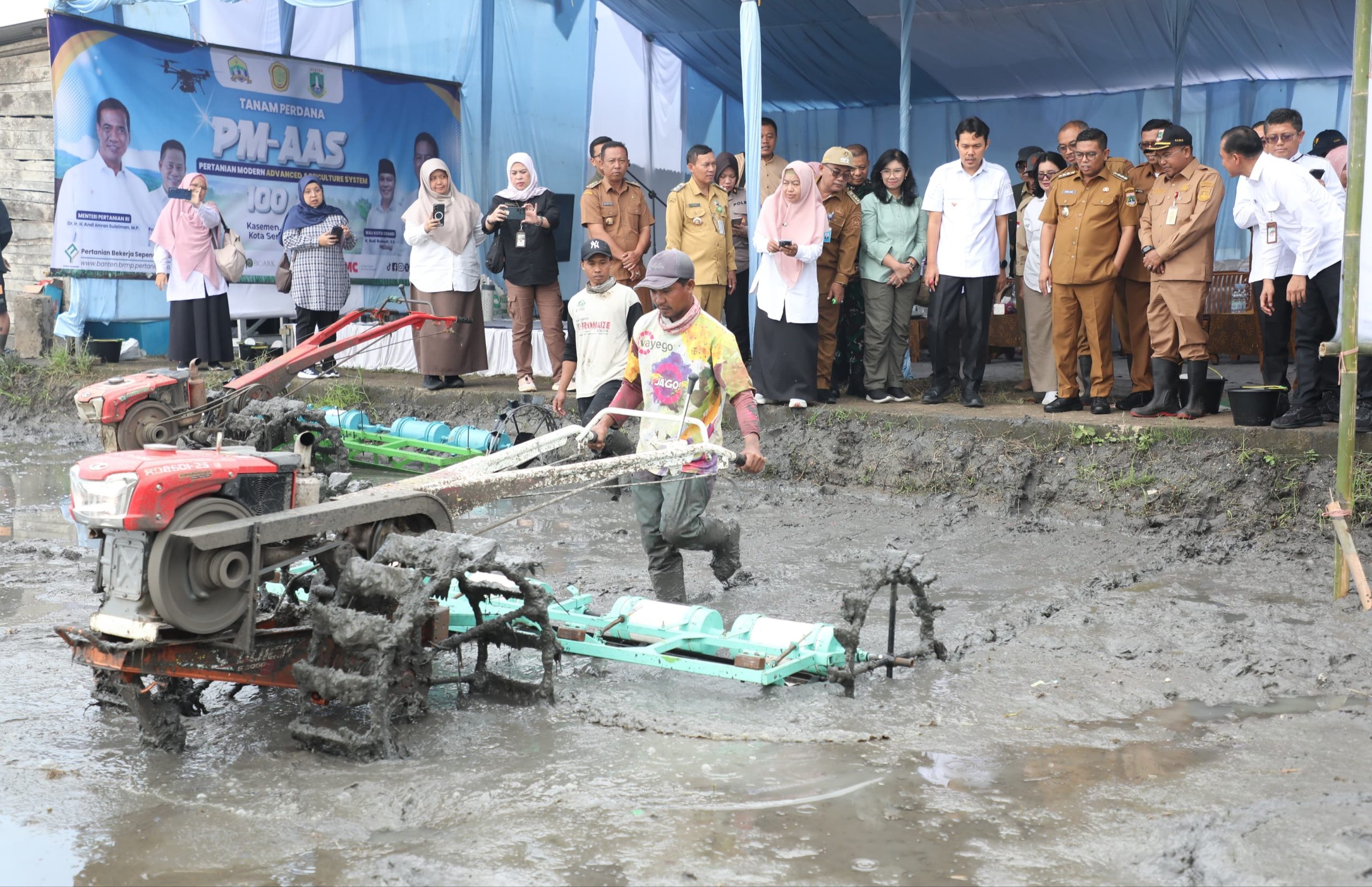
Serang City Rice Fields Become National Pilot Project, Agis: Upgraded 10 Tons per Hectare
SERANG CITY – The Serang City Government (Pemkot) together with related parties continues to accelerate strengthening food security through concrete steps in the agricultural sector. One of the main focuses that is being pushed is increasing rice production to reach 10 tons per hectare, from previous achievements which were still below that figure.
This effort is carried out through agricultural transformation based on modern technology. One of them is by using the Direct Seed Planting Tool (Atabela), which allows the planting process to be tighter, more efficient, and can save time, labor and use of seeds.
Deputy Mayor of Serang, Nur Agis Aulia, said that a number of rice fields in Serang City are currently being prepared as pilot projects to support the national food self-sufficiency program. The city of Serang is also included in the pilot project along with 14 other provinces in Indonesia.
“We continue to increase production. The target is to reach 10 tons per hectare,” said Agis after attending the first planting activity of the Banten Province Modern Advanced Agriculture System (PM-AAS) in Margaluyu Village, Kasemen District, Tuesday (5/5/2026).
This activity was also attended by the Governor of Banten Andra Soni, Secretary of the Agricultural Assembly and Modernization Agency of the Indonesian Ministry of Agriculture Husnain, as well as a number of other related parties.
According to Agis, increasing agricultural productivity does not only rely on technology, but is also supported by the use of superior seeds, appropriate fertilization, and intensive assistance to farmers so that the cultivation process runs optimally.
He believes that the success of this program will have a big impact on the welfare of farmers. With increased harvest yields, it is hoped that farmers’ income will also increase and be able to encourage regional economic growth.
“If this is successful, Serang City will not only be able to meet its own food needs, but can also become a food barn for other areas,” he said.

The Serang City Government will also continue to strengthen collaboration with the central government and various stakeholders to ensure the program runs optimally. This synergy is considered important to bring innovation and answer challenges in the agricultural sector.
With this strategy, Serang City is optimistic that it can become a pilot area in realizing national food self-sufficiency while strengthening food security at the local level.
This program is also in line with the development vision of the Mayor and Deputy Mayor of Serang in realizing “Green Serang” and “Prosperous Serang”.
Meanwhile, Secretary of the Agricultural Assembly and Modernization Agency of the Indonesian Ministry of Agriculture, Husnain, said that the meeting rice planting program is currently being promoted simultaneously in 14 provinces in Indonesia.
“In the future, if this pilot project is successful, we will expand it to other areas,” he said.

Banten Governor Andra Soni also expressed his optimism regarding the achievements of rice production in Serang City and hopes that the target of 10 tons per hectare can be realized soon.
PakarPBN
A Private Blog Network (PBN) is a collection of websites that are controlled by a single individual or organization and used primarily to build backlinks to a “money site” in order to influence its ranking in search engines such as Google. The core idea behind a PBN is based on the importance of backlinks in Google’s ranking algorithm. Since Google views backlinks as signals of authority and trust, some website owners attempt to artificially create these signals through a controlled network of sites.
In a typical PBN setup, the owner acquires expired or aged domains that already have existing authority, backlinks, and history. These domains are rebuilt with new content and hosted separately, often using different IP addresses, hosting providers, themes, and ownership details to make them appear unrelated. Within the content published on these sites, links are strategically placed that point to the main website the owner wants to rank higher. By doing this, the owner attempts to pass link equity (also known as “link juice”) from the PBN sites to the target website.
The purpose of a PBN is to give the impression that the target website is naturally earning links from multiple independent sources. If done effectively, this can temporarily improve keyword rankings, increase organic visibility, and drive more traffic from search results.